

- An SDK gives developers language-specific code for calling an API or platform.
- An MCP server gives compatible AI applications a protocol-based interface for discovering and using external capabilities.
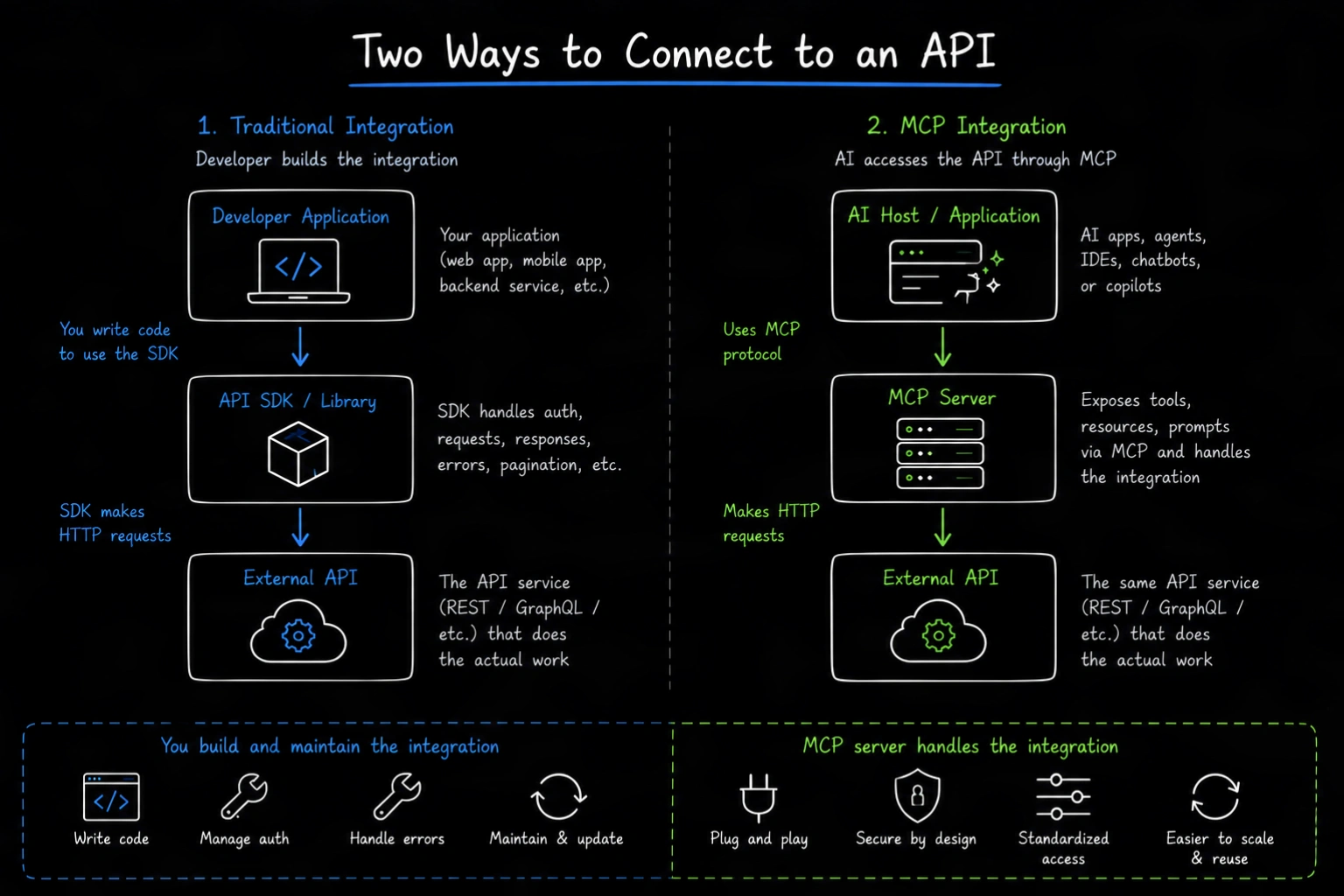
MCP vs SDK at a glance
How a traditional SDK works
A developer installs a package, creates a client, and calls methods.- Product application code
- Backend services
- Scripts and automation
- Mobile and web clients
- Deterministic workflows
- High-volume programmatic API access
How an MCP integration works
An AI host connects to an MCP server and discovers its capabilities.- AI assistants
- Coding agents
- Natural-language workflows
- Reusable integrations across compatible AI clients
- Runtime capability discovery
Different consumers require different design
SDK users read documentation and write code. AI applications interpret capability metadata. An SDK method may work well with a concise method name because the developer has types and documentation. An MCP tool needs a description that helps a model decide:- When to use the tool
- When not to use it
- Which inputs are required
- What effect the action has
- What the result contains
MCP does not replace your SDK
An MCP server is not a general replacement for a language SDK. Developers still need SDKs when they want:- Compile-time types
- Direct control over execution
- Native language conventions
- Efficient bulk operations
- Application-specific retry logic
- Fine-grained API coverage
SDKs can power MCP servers
An MCP server can use an existing SDK internally:- Authentication helpers
- Request and response types
- Pagination
- Retry behavior
- API error handling
Authentication differences
SDKs often receive an API key or access token directly from application code. MCP authentication depends on deployment:- Local servers may receive credentials through host configuration or the operating-system credential store.
- Remote servers may use OAuth, scoped tokens, or service credentials.
- The underlying API may still require its normal credentials.
Versioning differences
An SDK has its own package version and depends on an API version. An MCP integration may involve:- MCP protocol version
- MCP server version
- Tool schema version
- Underlying API version
- Client-specific feature support
When to ship an SDK
Ship an SDK when developers need to embed your API in software. Prioritize:- Strong types
- Language conventions
- Complete API coverage
- Code examples
- Stable versioning
- Predictable errors
When to ship an MCP server
Ship an MCP server when AI applications need to discover and use your product. Prioritize:- Focused capabilities
- Descriptive tool metadata
- Safe defaults
- Clear approval boundaries
- Structured results
- Client compatibility
- Observability